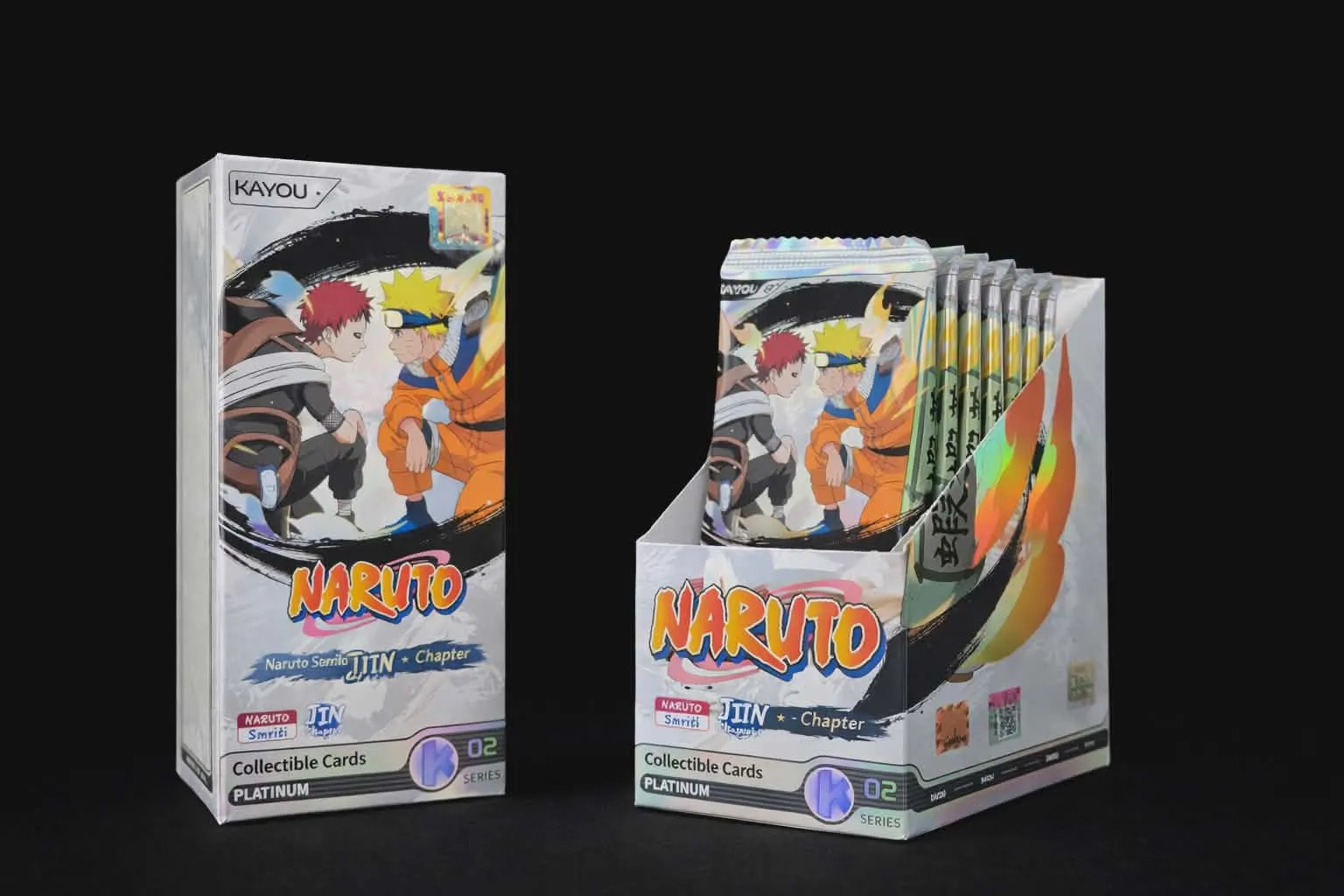
You just cracked a booster box, and something good landed in your hands. Maybe it's a serialised card, maybe it's a high-rarity pull you've been chasing for months. The next thought that crosses most collectors' minds: should I get this graded?
It's a fair question — and the honest answer is, it depends on the card. Grading can protect value and lift resale on the right cards. On the wrong ones, it turns a decent raw card into an expensive paperweight. Here's how to think it through.
Quick Answer
Grading is worth it for high-rarity, highly desirable KAYOU Naruto cards — especially serialised cards in excellent condition. For common pulls, middle-tier rarities, or anything with visible wear, the all-in cost will almost certainly outweigh any realistic resale uplift. When in doubt, keep it raw and protected.
The Real Question — Does Grading Pay Off?
Grading only pays off when the graded version of a card commands meaningfully more than the raw version, and that gap is wider than what you'll spend getting there.
The challenge with KAYOU Naruto cards is that the market is still maturing, particularly in Australia. Graded KAYOU cards do trade — serialised cards with high grades have changed hands at strong premiums — but the established comparables for every rarity tier simply don't exist yet the way they do for Pokémon or sports cards.
That means you're making a calculated bet rather than following a formula. Some questions worth asking before you send anything off:
- Is there existing demand for this card in graded form?
- What does a raw copy of this card realistically sell for right now?
- Would a high grade (PSA 10 / BGS 9.5 / TAG 10) materially move that number?
- Can you absorb the all-in cost if the grade comes back mediocre?
If you can't answer those confidently, you probably need more research before committing.
What Grading Actually Costs an Australian Collector
This is where a lot of collectors underestimate the commitment. The grader's fee is just the starting point.
From Australia, you're looking at:
- The grading fee itself — varies by grader and service tier
- International insured shipping — sending cards overseas is not cheap, and insuring them for full replacement value adds up
- Return postage — the grader ships back to you, and that cost lands somewhere too
- Turnaround time — your card is gone for months on some service tiers; that's opportunity cost
When you add all of that together, the all-in cost of grading a single card from Australia is significantly higher than what most people expect when they first look at a grader's fee schedule. A card needs to be worth grading on its own merits — before you factor in the round-trip from Australia — otherwise the economics rarely work out.
This is why card selection is everything. If the realistic graded value of your card doesn't comfortably clear the all-in cost with room to spare, you're better off keeping it raw.
Which KAYOU Naruto Cards Are Worth Grading (and Which Aren't)
Cards that make sense to grade
Serialised cards in strong condition. These are the clearest candidates. A card numbered to a small print run, pulled in near-mint condition, with an identifiable collector market — that's a card where a high grade can meaningfully affect resale. See the serialised cards guide for more on how serial numbering works across the product lines.
Chase rares with genuine secondary market demand. If a card has an active market and buyers are specifically seeking graded copies, grading can protect and lift value. The keyword is active — not "I think this might be popular eventually."
Cards you're planning to sell, not keep. If a card is genuinely sellable and you're debating whether to grade first, the calculus is different from a keeper. More on this below.
Cards that rarely justify grading
Mid-tier rarities with thin demand. A card that sells raw for a modest amount doesn't have enough upside to absorb the all-in grading cost.
Commons and lower rarities. Straightforward: the math doesn't work. Not even close.
Cards with any visible wear. Grading a card you suspect has edge wear, scratches, or print lines is a costly way to confirm what you already suspected. A low grade on a niche card often trades below a clean raw copy — buyers want a raw card they can assess themselves, not a slab confirming flaws.
Cards you're not sure about. If you're genuinely uncertain whether a card is valuable, check how rare is my card first and do your secondary market research before committing to grading costs.
The Serial-Number Factor
Serialisation changes the calculus considerably. A card that exists in limited numbered form carries built-in scarcity that a graded holder makes verifiable and displayable. Collectors who want these cards want the assurance a slab provides.
That said, even serialised cards need to be in strong physical condition to warrant grading. A serialised card with wear still gets a low grade, and a low grade on a niche market card can be a dead position to be in.
If you've pulled something serialised and it's in excellent condition, that's the strongest case for grading in the KAYOU Naruto space. Read the serialised cards guide to understand the different serial tiers across the product lines before you decide.
Grade Before Selling, or Sell Raw?
This is the question that trips up a lot of collectors. The honest answer: selling raw is faster, cheaper, and lower-risk for most cards.
Grading before selling only makes sense when:
- The card has clear demand in graded form (buyers are searching for it slabbed)
- You're confident it will grade well
- The premium a high grade adds is enough to justify the all-in cost and the wait time
If you're selling in a time-sensitive market — say, a card that's hot right now because of a product release — locking it in a grading submission for several months can mean you miss the window entirely. Raw and sold beats graded and waiting in a declining market.
For cards you believe have long-term collector value and aren't in a rush to move, grading before selling is a more reasonable approach — particularly for serialised pulls.
When to Just Keep It Raw
Not everything needs to be in a slab. If a card is a personal favourite, part of a set you're completing, or something you want to actually enjoy looking at without the formality of a graded holder, keeping it raw is completely valid.
What you should do regardless of whether you grade is protect it properly — sleeve it immediately in a quality inner sleeve, then a rigid top-loader or card saver. Good storage habits prevent the kind of damage that makes grading irrelevant later. The how to store and protect your cards guide covers the right setup.
A well-kept raw card that's maintained its condition keeps your options open. You can always grade later; you can't un-damage a card that was stored poorly.
How to Choose a Grader
If you've worked through the above and landed on "yes, this card is worth grading," the next question is which grader to use. PSA, TAG, BGS, and CGC each have different strengths, turnaround options, and recognition levels in the KAYOU market.
That comparison is covered in detail separately — see how to grade KAYOU Naruto cards (PSA vs TAG vs BGS vs CGC) for a full breakdown before you decide where to send your card.
Frequently Asked Questions
Is it worth grading KAYOU Naruto cards?
For the right card — yes. Serialised cards in excellent condition, or high-rarity chase cards with active demand, can see genuine value uplift with a high grade. For most pulls, the all-in cost from Australia will outweigh any realistic return. Grade selectively, not reflexively.
How much does it cost to grade a card from Australia?
There's no single figure, and it shifts with exchange rates and service tiers. What you need to account for is the grading fee, insured international shipping to the grader, and return shipping back to Australia. The all-in cost is meaningfully higher than the grader's fee alone — factor in all three components before deciding whether your card justifies it.
Which KAYOU Naruto cards are actually worth grading?
Serialised cards in strong condition are the clearest candidates. Beyond that, high-rarity cards with an active graded market — where buyers are specifically seeking slabbed copies — are worth considering. Common cards, mid-tier rarities with thin demand, and any card with visible wear rarely justify the economics.
Does grading increase a card's value?
A high grade on a desirable card can increase resale value. A mediocre grade on a niche card can actually suppress it — buyers may prefer a raw card they can assess themselves over a slab confirming damage or flaws. Grading lifts value when the card is genuinely sought after and grades well. It's not automatic.
Should I grade before selling or sell raw?
Sell raw unless you have a strong reason not to. Grading takes time and money, and markets shift. The exception is serialised or highly desirable cards where buyers actively seek graded copies and you're confident the card will grade well. For everything else, raw and available beats graded and waiting.
Whether you're deciding on a fresh pull or reassessing cards already in your binder, the best place to start is knowing exactly what you have. Understand whether KAYOU Naruto cards are worth it as a collecting category, then make the grading call from there.
Ready to chase your next pull? Browse our booster boxes and booster packs — we stock KAYOU Naruto product for Australian collectors.
Keep Exploring
Continue into the most relevant buying pages and cornerstone guides from this topic.
Cornerstone
KAYOU Naruto Cards Australia: The Full Guide
Start here for an end-to-end view of sets, rarities, and the local buying experience.
Read the full guideChase cards
Rarest KAYOU Naruto Cards
The chase cards collectors are hunting and what makes each one valuable.
See the chase listBuying
Best KAYOU Naruto Booster Box to Buy in 2026
The 2026 box rankings: value, chase potential, and the right one for your budget.
See the 2026 picksHonest take
Are KAYOU Naruto Cards Worth It?
An honest collector's read on value, authenticity, and the long-term hold case.
Read the honest takeWritten By
Cottier TCG Editorial Team
Bringing you the latest and most accurate TCG news from across the globe. Based in the Central Coast, NSW Australia.
Collectors Club
Enjoyed this guide? Get the next drop first.
Join the Collector's Club for restock alerts, new collector guides, and early access to KAYOU Naruto boxes before they sell out.
New members get 10% off your first order
Keep Reading
Other stories you might enjoy from our experts.
Most Valuable KAYOU Naruto Characters to Collect
Not every popular character translates to a high-demand collectible. Here's which KAYOU Naruto characters collectors actually chase, and why.
KAYOU Naruto vs Pokémon Cards: A Collector's Guide
Thinking about branching out from Pokémon into Naruto cards? Here's an honest, practical comparison for collectors — no hype, just the facts.
KAYOU Naruto Chinese vs English Cards: What's the Real Difference?
Three print families, one confusing market. Here's what separates Chinese, SEA English, and NA English KAYOU Naruto cards — and what AU buyers actually get.