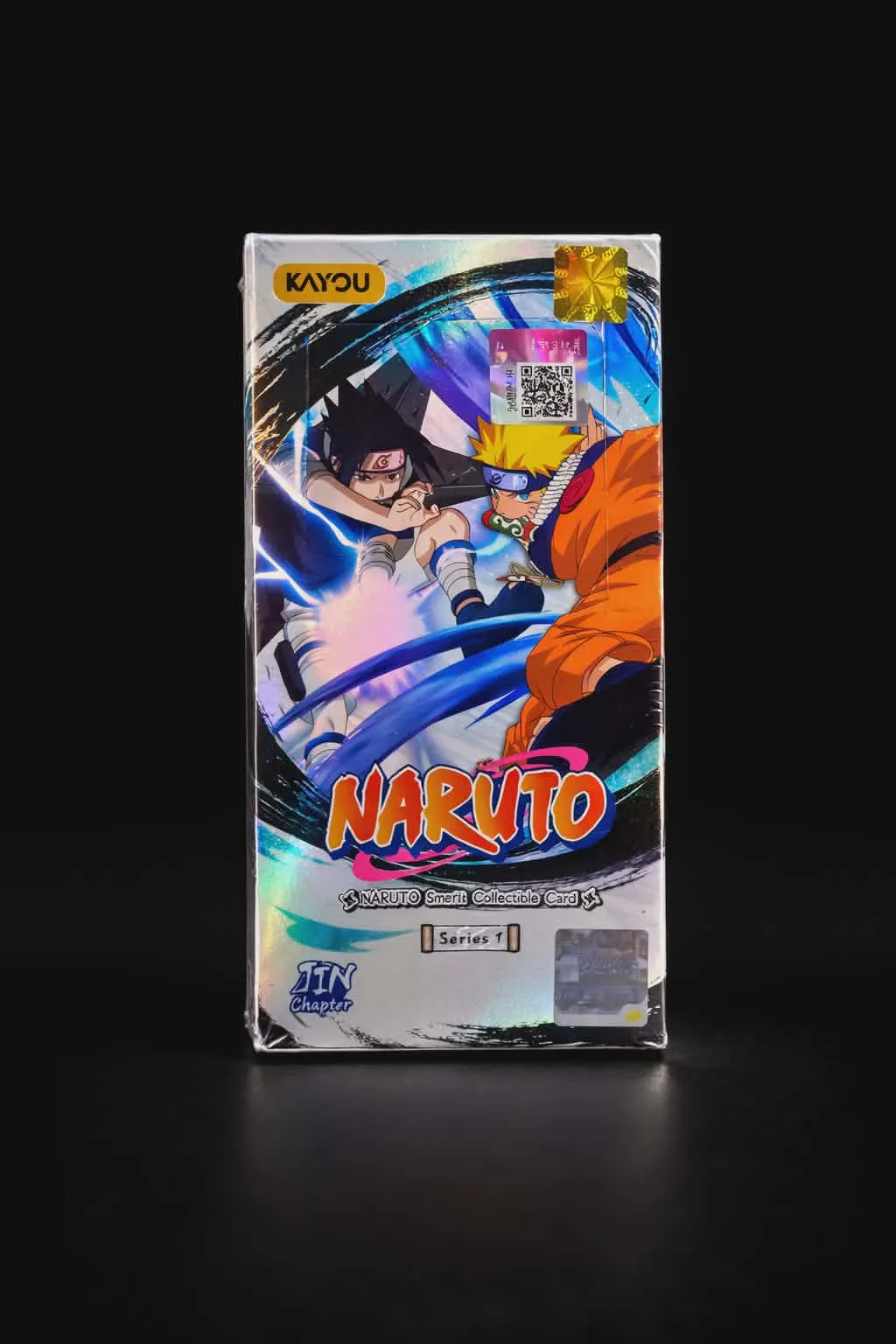
Shop this guide
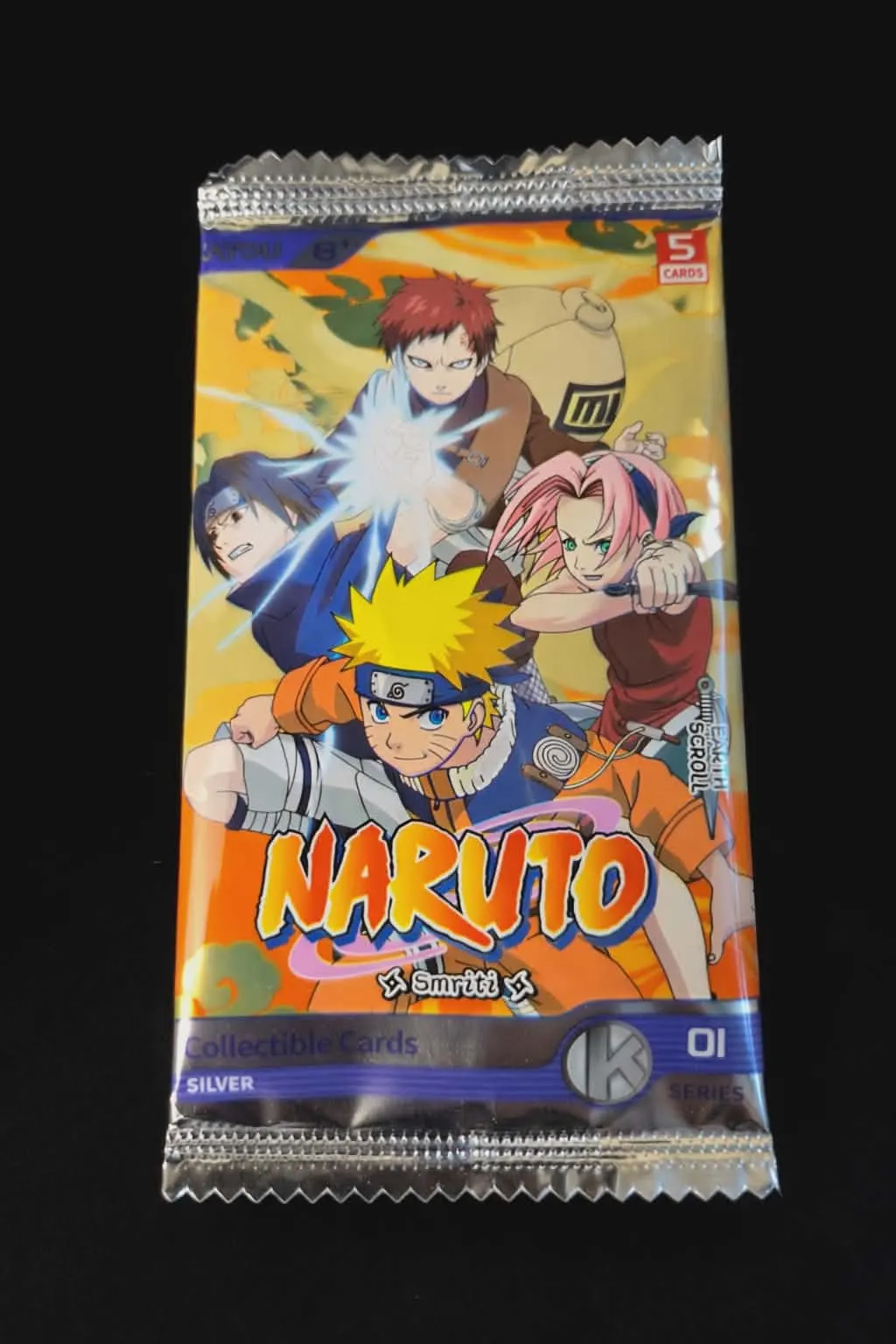
Live price & stock · dispatched from NSW.
Quick Answer
Most individual Naruto cards, from any maker, are worth very little. For KAYOU Naruto, resale value sits in a narrow band of top-rarity and serialised cards. As a hobby, KAYOU Naruto is worth it if you love Naruto and enjoy opening packs for the artwork and chase cards, but not if you want a proven investment or a tournament scene. Bandai, Panini, Topps and Cicaboom have made Naruto cards too, so check the maker's name on your card before you judge its value.
Disclosure: we sell these cards, so we are biased. We open the same sealed product we sell, and we have kept the downsides in.
Is KAYOU Naruto worth it? The verdict by collector type
| For this collector... | Worth it? | Why |
|---|---|---|
| Naruto fans who enjoy sealed openings and premium artwork | Yes | Official licence, strong foils, deep character selection |
| Collectors chasing investment-grade assets | Not yet | Secondary market still maturing, no proven appreciation track record |
| Collectors who want competitive tournament play | No | There is no tournament scene or competitive format |
| Beginners curious about the hobby | Yes, but try cheaply first | Single packs let you test at low cost |
| Collectors priced out of Pokemon or Lorcana | Yes | KAYOU Naruto sealed product is significantly more accessible on price |
Are Naruto cards worth anything?
If you are holding a Naruto card and want to know whether it is worth anything, the answer depends on which Naruto card you have. At least four different things get sold as "Naruto cards":
- Bandai's Naruto Collectible Card Game. A playable game that ran in English from 2006 to 2013 before it was discontinued. Bandai has since announced a new NARUTO CARD GAME for 2027, which is a separate product.
- Releases from other makers. Panini has released Naruto Shippuden sticker albums and trading card collections, including its 2022 Hokage collection. Topps launched a Naruto card series in India in 2024, sold as Topps Animax and marketed as a Naruto collectible card game.
- Naruto Mythos. A playable trading card game from Italian publisher Cicaboom, launched in March 2026. It is a different hobby from the one this post covers, so our Naruto Mythos review answers it separately.
- KAYOU Naruto. Licensed collectible cards with rarity tiers and no gameplay, and the line CottierTCG stocks and this post covers. Our is KAYOU Naruto a TCG or a collectible guide explains the difference.
Which Naruto cards are worth money?
Across all of these lines, values vary widely by card, and most common cards sell for little. In KAYOU Naruto, value concentrates in high rarity tiers, unusual finishes and, above all, serialised cards with a low print number. A card outside that band is worth keeping because you like it, not because of what it will fetch. The rarest KAYOU Naruto cards guide names the cards at the top, and the card list and price guide gives a typical value band for each rarity tier.
Mostly low value is not the same as worthless: every line has a small number of cards that still sell.
How to tell which Naruto cards you're holding
Start with the maker's name in the small print on the card, or on the pack or box if you still have it: Bandai, Panini, Topps, Cicaboom or KAYOU. A KAYOU card carries a short rarity code such as R, SR, SSR or PTR and no rules text. The full step-by-step check, with card codes and box names, is in our guide to the four Naruto card products.
If your card is KAYOU, the rest of this post covers that line, and the KAYOU Naruto card list and price guide gives a typical value band for each rarity tier.
If a card claims to be a high-tier KAYOU pull but something looks off, our guide to spotting fake KAYOU cards covers what to check.
Naruto Shippuden cards: what they're worth
Shippuden is the name of the second Naruto anime series, so "Shippuden" on a card tells you which part of the story it shows, not who made it. Bandai's English card game was itself sold as the Naruto Shippuden Collectible Card Game from around 2010, so an older Shippuden card with rules text is most likely Bandai. Panini's sticker and card collections also carry the Shippuden name, and KAYOU's upcoming Jin Chapter Series 4, a North American edition due in October 2026, is built around the Shippuden arc. Identify the maker first with the checks above.
The value rule does not change with the branding: most common cards sell for little, so check sold listings for the exact card before deciding. Our card condition guide explains how wear is judged before you list anything.
What KAYOU Naruto actually is
KAYOU Naruto is an officially licensed collectible card line produced by KAYOU. Its English cards are officially licensed, which matters if authenticity and legitimacy are important to you.
These cards are collectibles, not a playable card game. There is no competitive tournament structure and no deckbuilding. The hobby centres on the collector experience: opening sealed product, chasing rare pulls and building a binder of favourite characters.
If that sounds good, you are going to enjoy KAYOU Naruto. If it sounds boring, you probably will not. Our KAYOU Naruto cards page shows the full English range.
The pros: why collectors love KAYOU Naruto
It is officially licensed
KAYOU holds an official licence to produce Naruto collectible cards. When you buy a sealed box from a legitimate Australian retailer, you are getting real, licensed product. Our authentic KAYOU Naruto cards page explains the sourcing in detail.
The foils and finishes look good in hand
KAYOU puts real effort into print quality, foil patterns and card finishes. High-rarity cards from the Jin Chapter line carry textured and holographic finishes. For collectors who care about how a card looks in hand, this is a major draw.
Significantly more accessible than Pokemon and Lorcana
KAYOU Naruto sealed boxes are notably cheaper than comparable Pokemon or Lorcana products in Australia. You can open sealed product without spending what you would on a flagship Pokemon set box. Check the live Naruto booster box range for current pricing, since it does move, but the gap to Pokemon has been consistent.
Single packs are also available for a very low entry point. See our booster pack range to try the hobby cheaply.
An active community
KAYOU Naruto has an active collector community. YouTube box openings, Instagram pull posts and the r/KayouNarutoCards subreddit make the hobby fun to follow.
Real chase cards exist
Each line has its own rarity ladder. Jin Chapter runs from R up to SE, Earth Scroll tops out at CR, and the serialised cards in Jin Chapter Series 3 sit above both. Our KAYOU Naruto card rarity guide walks through each ladder if you want to understand what you are pulling.
Iconic character selection
Naruto has a huge cast of fan-favourite characters. From Naruto, Sasuke and Kakashi to Itachi, Minato and Jiraiya, the source material gives KAYOU a deep pool of characters to print.
The cons: where KAYOU Naruto falls short
No competitive play
There is no tournament scene and no draft format. If you play Pokemon TCG Live or Lorcana tournaments, KAYOU Naruto is not going to replace that. It is a pure collector hobby.
Box variance is real
Like any sealed card product, you can get unlucky. One box might give you a handful of strong hits, another might be lighter. KAYOU prints appearance odds on the Jin Chapter and Earth Scroll boxes we stock, but those odds are averaged across total production and do not split the top slot by tier, so beyond the per-pack guarantees you are trusting the long-run average.
Not yet an investment-grade hobby
KAYOU Naruto is not Pokemon WOTC. Graded population reports are still thin. Secondary market pricing is still developing. If you are buying sealed product hoping to resell at a significant premium, that is a speculative bet, not a proven playbook.
That does not mean the cards have no value. It means you should buy them because you enjoy collecting them, not because you expect them to fund your retirement.
English availability is still catching up
Earlier KAYOU Naruto series were Chinese-only. English licensing is newer, and not every set available in Asian markets has reached English shelves yet. Completionists hoping to collect every series ever printed will hit some gaps.
Coming from Pokemon: what changes and what doesn't
A lot of collectors arrive at KAYOU from Pokemon, so it is worth naming the structural differences rather than just the price gap.
The biggest is what drives demand. Pokemon values carry a gameplay layer (tournament results and rotating metas create demand for cards as playing pieces) plus decades of nostalgia. KAYOU has neither. With no game attached, a card's desirability comes down to rarity, character popularity and artwork. That makes the market simpler to read, but also narrower.
The rarity structures differ too. Pokemon's ladder tops out in low-print special cards whose scarcity you infer from set data. KAYOU's tops out in serialised cards with the print run stamped on the card face: a card numbered 23/99 is verifiably one of 99. For collectors who like scarcity they can see, that is KAYOU's most distinctive feature. The serialised cards guide explains the numbering, and the chase cards guide covers which pulls collectors actually hunt.
One caution: "the next Pokemon" is not a useful frame. Pokemon's appreciation rests on play-driven demand, nostalgia cycles and market infrastructure that KAYOU's short English-market history has not had time to build. Enjoy the parallels, but don't hang a purchase decision on them.
Who will enjoy KAYOU Naruto?
After watching who buys these cards and who comes back for more, here is the pattern.
You will probably love it if
- You are a Naruto fan first and a card game player second
- You enjoy the opening experience of sealed product
- You appreciate premium foils, textures and artwork
- You want a collecting hobby that costs less than Pokemon or Lorcana
- You are happy building a binder for display, not a deck for play
You probably will not enjoy it if
- You only collect cards that appreciate as investments
- You need a competitive tournament scene to stay engaged
- You dislike variance and would rather buy singles than open packs
- You are not a fan of Naruto as a franchise
Is KAYOU Naruto a good investment?
Probably not, at least not yet. The secondary market is still maturing, graded population reports are still thin, and buying sealed product to flip is a speculative bet. Buy for the hobby and treat any rise in value as a bonus.
Resale reality: what sells and what sits
If you ever sell, know the spectrum. Base R and SR cards have near-zero individual resale value, so treat them as the cost of the opening experience. Mid-tier rares trade occasionally in collector groups, but finding a buyer at any particular price can take weeks. Genuine secondary-market activity concentrates in high-rarity chase cards and, above all, serialised pulls: a low number on a popular character is the closest thing KAYOU has to a trackable collectible. The rarest KAYOU Naruto cards guide shows that top shelf, and most valuable KAYOU Naruto characters covers which characters collectors pay up for.
Know the infrastructure gap too. Price trackers and collector apps exist but are thin and often inflated, so sold listings remain the reliable check. Australian sales mostly happen on eBay and in collector groups, and two sales of the same card a month apart can land differently simply because the market is small. Deeper markets exist on Chinese-language platforms, but they are impractical for most Australian sellers.
To price any Naruto card, KAYOU or older, search the exact set name and card number, filter to sold listings only, and ignore asking prices on anything unsold. Check Australian sold results separately from overseas ones, because international postage changes what a card really clears at here. If a card has no sold history at all, that tells you how much demand there is for it right now.
How to try KAYOU Naruto without overcommitting
If you are on the fence, you do not need to commit to a full sealed box straight away. Each rung below is a bigger commitment than the one before it.
- Easiest entry: A single Earth Scroll Series 2 booster pack gives you the feel of a real KAYOU pack for the cost of a coffee.
- Low-risk sampler: The Naruto Booster Pack Sampler Bundle pairs one Jin Chapter Series 1 pack with one Jin Chapter Series 2 pack, so you can compare two Jin Chapter series in one order.
- Wider spread: The Mixed English Naruto 5-Pack Bundle mixes Jin Chapter and Earth Scroll packs, so you see both lines before you pick one.
- Full box: When the hobby clicks, compare the Naruto booster boxes. The Earth Scroll Series 2 box is the cheaper start and the Jin Chapter Series 1 box has the deeper rarity ladder.
- Box plus extras: The Earth Scroll Series 2 Starter Bundle is a sealed Series 2 box plus four extra Series 2 packs.
Starting small is the cheapest way to find out if the hobby clicks. We would rather you spend the price of a pack on something you love than the price of a box on something you regret. If you are torn between the two lines, best KAYOU Naruto set for collectors and our booster box comparison lay out the trade-offs.
For more detail on how to get going, the KAYOU Naruto Australia guide walks through the full beginner path.
Conclusion
Are KAYOU Naruto cards worth it? If you love Naruto, enjoy premium collectibles, appreciate strong artwork and foiling, and want a collecting hobby that does not drain your bank account, yes.
If you need competitive play, proven investment returns, or graded-value certainty, look elsewhere.
The only real way to know which camp you are in is to try it cheaply. Grab a Naruto booster pack and see how you feel when you open it. If you want to know how often the big hits turn up before you buy a box, the pull rates and box odds guide sets out what is verified.
Frequently Asked Questions
Are KAYOU Naruto cards worth it for collectors?
For collectors who love Naruto and enjoy sealed product openings, artwork, and chase cards, yes. The combination of official licensing, strong foils, and accessible pricing makes the hobby worth trying.
Are KAYOU Naruto cards a good investment?
Not yet. The secondary market is still maturing, grading is still uncommon, and there is no long track record of price appreciation. Buy them because you enjoy them, not because you expect a financial return. The resale reality section above goes deeper on what actually sells.
Are Naruto cards worth anything?
Most individual Naruto cards are worth very little, whichever line they come from. In KAYOU Naruto, value concentrates in high rarity tiers, unusual finishes and serialised cards with a low print number. If your card carries a KAYOU rarity code and no rules text, it is most likely a KAYOU card, and the KAYOU Naruto card list and price guide gives the value band for its rarity tier.
Will Naruto cards go up in value?
Treat anyone who promises that with scepticism. KAYOU's graded population reports are still thin, price trackers are unreliable and the Australian secondary market is small, so there is no track record to extrapolate from. Serialised and top-tier chase cards hold their value best, but buy because you enjoy the cards, not as a financial position.
Are KAYOU Naruto cards authentic?
Yes. KAYOU holds an official licence to produce Naruto collectible cards, and its English cards are officially licensed. Our authentic KAYOU Naruto cards page explains the sourcing in more detail, and our guide to spotting fake KAYOU cards covers what to check before you buy.
Is KAYOU Naruto cheaper than Pokemon?
Significantly. KAYOU Naruto sealed boxes are notably cheaper than equivalent Pokemon or Lorcana product in Australia. Check the live Naruto booster box range for current pricing.
Can you play KAYOU Naruto cards competitively?
No. KAYOU Naruto is a collector-focused product with no tournament scene or competitive meta. It is designed for opening, collecting, and display rather than play.
What is the cheapest way to try KAYOU Naruto?
A single Earth Scroll Series 2 booster pack is the lowest-cost entry point, and the Earth Scroll Series 1 booster pack is the next-cheapest single pack. The Naruto Booster Pack Sampler Bundle is the next step if you want to compare two Jin Chapter series at once.
Who is KAYOU Naruto best suited for?
Naruto fans who enjoy the collector experience: opening sealed product, chasing rare pulls, and building a binder of favourite characters. It is not suited to collectors who need competitive play or who are primarily seeking investment returns.
What rarities are worth chasing in KAYOU Naruto?
In Jin Chapter the scarcest tiers are SE and SP, with BP and MR close behind, and Series 2 adds AR full-arts. In Earth Scroll the chase is CR and AR, and the serialised cards in Jin Chapter Series 3 sit above both lines. Character matters as much as tier, while PTR is guaranteed one per pack in Jin Chapter, so most PTR copies are affordable. The full breakdown is in the KAYOU Naruto card rarity guide.
How do I check what a KAYOU Naruto card is actually worth?
Look at what the card has actually sold for, not what sellers are asking: collectors on r/KayouNarutoCards warn that KAYOU asking prices are scattered, that unsold cards sit relisted for months at optimistic numbers, and that frequent reposting can make an asking price look like a market price. Read the card number printed at the bottom of the card face, search that number on eBay, then filter to sold and completed listings. Treat third-party collector apps as a rough sketch only, since they are widely reported to inflate values. Our KAYOU Naruto card value guide breaks down the five factors that actually drive price: rarity, serial number, condition, edition and character demand.
Do KAYOU Naruto cards go up in value like Pokemon cards?
There is no evidence for that yet, and anyone claiming certainty is speculating. Pokemon's price history rests on decades of play-driven demand, nostalgia and mature market infrastructure that KAYOU does not share. Serialised KAYOU cards have verifiable scarcity in their favour, but the market is young and thin, so collect first and treat any appreciation as a bonus.
Is grading KAYOU Naruto cards worth it?
Usually not. Grading fees, international shipping and turnaround typically cost more than the value they add. The exception is genuinely scarce cards: low-number serialised pulls of popular characters. How to grade KAYOU Naruto cards walks through when it makes sense and when it does not.
How do I tell if my Naruto cards are Bandai, Topps or KAYOU?
Start with the maker's name in the small print or on the original packaging, because that is the deciding check. A short rarity code such as R, SR, SSR, UR or PTR with no rules text points to a KAYOU collectible. Our guide to the four Naruto card products has the full check.
Are old Naruto CCG cards from the 2000s worth anything?
Values vary widely by card, and most common cards sell for little. Bandai's English Naruto Collectible Card Game ran from 2006 to 2013. Check the exact set name and card number against sold listings before you write a binder off.
Are Naruto Shippuden cards worth anything?
Shippuden is the name of the second Naruto anime series, so the word on a card tells you the story arc, not the maker or the value. Bandai, Panini and KAYOU have all used the Shippuden name. Identify the maker first, then check what that exact card has sold for.
Is the Naruto CCG the same thing as KAYOU Naruto?
No. The Naruto CCG was Bandai's playable game with rules and decks; KAYOU Naruto cards are collectibles with no gameplay, valued on rarity, character and condition. Our is KAYOU Naruto a TCG or a collectible guide covers the difference.
Keep Exploring
Continue into the most relevant buying pages and cornerstone guides from this topic.
Authenticity
How to Spot Fake KAYOU Naruto Cards
The print, foil, packaging, and price checks that separate genuine KAYOU cards from counterfeits.
Learn the checksCollector
Best KAYOU Naruto Set for Collectors
Which series suits your first long-term collection if you only pick one.
Pick your setTrust
Authentic KAYOU Naruto Cards
Use the store's authenticity guide for a cleaner read on licensing and trustworthy stock.
Check authenticity tipsBrand hub
KAYOU Naruto Cards Australia
The whole line at a glance — Jin Chapter and Earth Scroll, every series and edition, with sealed boxes, packs and bundles in stock.
Explore KAYOU NarutoWritten By
Cottier TCG Editorial Team
Bringing you accurate KAYOU collecting news and buying guides for Australian collectors. Based in the Central Coast, NSW Australia.
Collectors Club
Enjoyed this guide? Get the next drop first.
Join the Collector's Club for restock alerts, new collector guides, and early access to KAYOU boxes before they sell out.
New members get 10% off your first order
Keep Reading
Other stories you might enjoy from our experts.
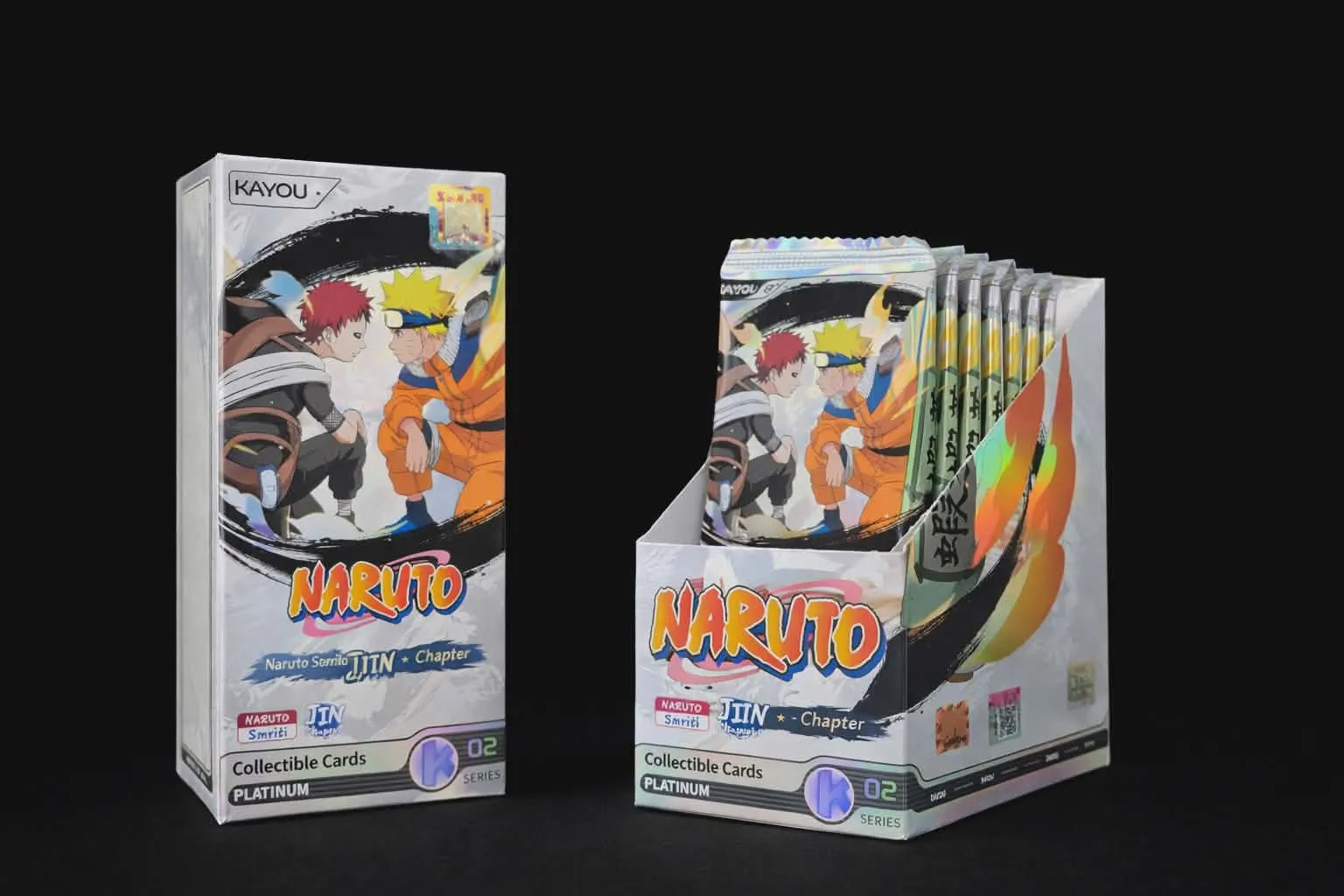
Most Valuable KAYOU Naruto Earth Scroll Series 2 Cards: Itachi CR and the Real Chase
Itachi CR sold 23 times at a A$384 median, from a cheap box. The Diamond UR the box advertises is a A$50 card. Every Earth Scroll Series 2 card worth money, from completed eBay AU sales.
Gaara CR A$104, Neji CR A$84, and a ten-card AR tier that reliably sells for A$70 a card. The Earth Scroll Series 1 cards worth keeping, priced from completed eBay AU sales.
Most Valuable KAYOU Naruto Jin Chapter Series 3 Cards: ASP, SE and the Serialised Ladder
ASP /99 cards from A$1,535 raw, SE /220 up to A$3,978, and the AR /777 and BP /999 serials most boxes actually produce. Every Series 3 card worth money, from completed eBay AU sales.