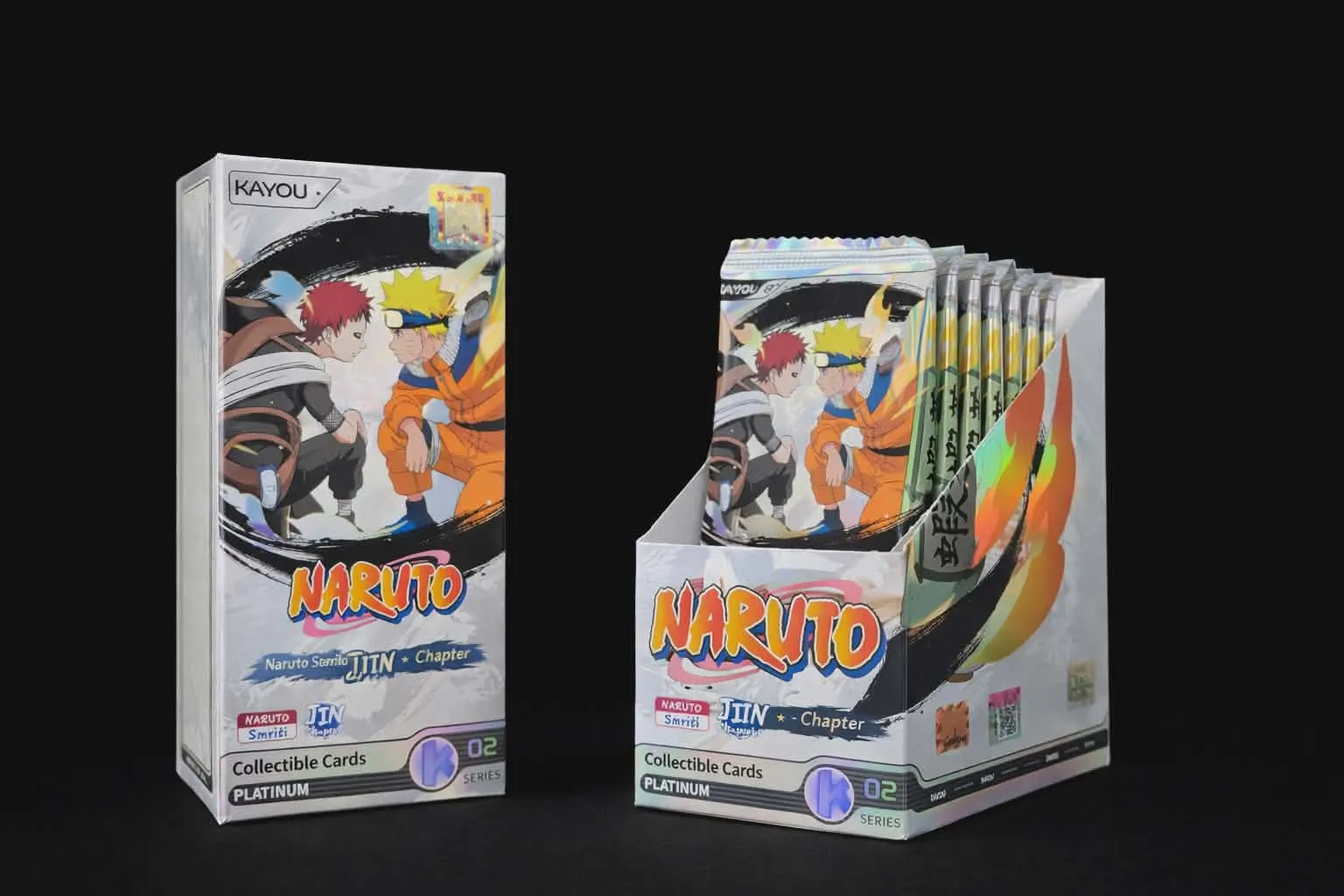
What we stock
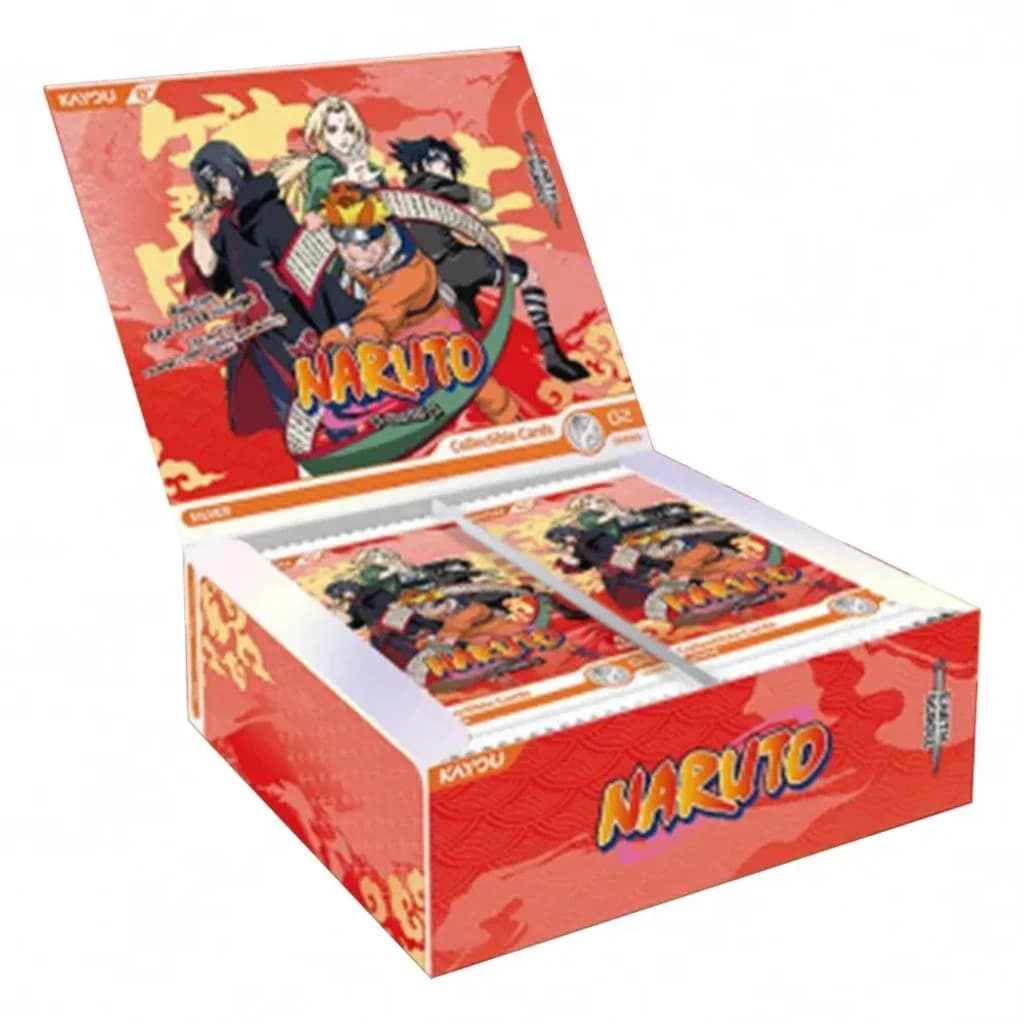
Live price & stock · dispatched from NSW.
If you've been weighing whether Naruto Mythos is worth getting into, the honest answer depends almost entirely on where you live and what you want from a card product. It's a genuinely different beast from most Naruto card products on the market — and that cuts both ways.
Quick Answer: Naruto Mythos is worth collecting IF you want a real playable trading card game with premium production, a growing organised-play roadmap, and serialised First-Edition chase cards — and you're in (or can import from) its EU/UK/Turkey/MENA launch territories. If you're in Australia and want Naruto cards you can actually buy, open, and collect today, Naruto Mythos isn't available locally yet — KAYOU Naruto booster boxes are the line that is, and they're collectibles, not a game.
The short answer — is Naruto Mythos worth collecting?
Conditionally yes, for the right buyer. Naruto Mythos TCG is a legitimate trading card game with official licencing, competitive organised play, and genuinely premium production values including a 22-karat-gold Legendary card. That's not hype — it's a real differentiator in a market full of cards that are pretty but inert.
The caveat is significant though: it launched in March 2026 specifically for Europe, the UK, Turkey, and MENA. Australia has no official distribution, no confirmed release date, and no local organised play — which strips away a substantial part of the product's appeal if you're here.
Whether it's worth it for you comes down to one question before everything else: can you access the product and the community that goes with it? If yes, there's a real case. If no, the maths changes considerably.
For a full side-by-side of how Mythos stacks up against the Naruto card product that is available in Australia, Naruto Mythos vs KAYOU Naruto covers the distinction in detail.
What you're actually buying into (a real TCG by Cicaboom)
This is worth stating plainly because there's genuine confusion online: Naruto Mythos is not a Bandai product, not a KAYOU product, and not a collectible-only card line. It is a competitive trading card game developed by Cicaboom, an Italian publisher, under official Naruto licencing.
Set 1, "Konoha Shidō", launched on 13 March 2026 with 152 cards. It's a genuine game — rules, deck-building, and competitive organised play — not a collectible-only card line. That is the single most important thing to understand before you spend a cent.
Second Edition of Konoha Shidō followed in May 2026, adding an Itachi & Sasuke Starter Pack and four Team Sets — aimed at players who want to enter the game without hunting First Edition product.
Set 2, "Shinobi Shiren", is targeted at Summer 2026, with September flagged in Cicaboom's latest communications. Set 3, "Akatsuki", is slated for Fall 2026 and is the one to watch: it introduces the Naruto Shippuden era and begins the game's global rollout beyond the current launch territories. A first European Championship is flagged for March 2027. All of these are targets, not guarantees — TCG release schedules move, and you should treat every forward date as provisional until a product is in hand.
The full picture on what's confirmed versus announced is at the Naruto Mythos set list & release schedule.
The case FOR collecting Naruto Mythos
There are genuine reasons experienced collectors are paying attention to this.
The production quality is real. The 22-karat-gold Legendary card (a Naruto Uzumaki, certified by Giusto Manetti Battiloro — a Florentine gold-leaf house with centuries of history) is not a marketing trick. Precision micro-engraving, individual serial numbers, approximately 2,000 English-language copies worldwide. That is a genuinely premium object. The top tiers of the Naruto Mythos rarest cards are built with materials and craft that most card products don't come close to.
The serialised First-Edition Secret Variants are permanently supply-capped. There are four Secret Variant cards in Konoha Shidō, each numbered to 75 in English. They are 1st-Edition-exclusive — not reprinted in Second Edition, not coming back. Once 1st Edition stock sells through, the only source is the secondary market. This is the same dynamic that makes 1st-Edition Pokémon product hold its position: a serialised card tied to a single print run is as scarce as it will ever be at the moment it's available.
It's a real game with a real roadmap. An organised-play structure with a European Championship targeted for March 2027, a Shippuden expansion in Set 3, and signals of international expansion. For collectors who also want to play, this isn't a dead end — it's an early stage of something being built out.
The community is early. Get-in-early appeal is real for some collectors, and Mythos is genuinely that at this stage. Whether that early position translates to anything meaningful long-term is unknowable, but the floor for community interest in a licenced Naruto game with this production quality is not nothing.
The risks every collector should weigh first
None of this is an investment guide, but these are the honest risks.
The secondary market is young and unproven. Naruto Mythos launched in March 2026. That is not long enough to have established reliable price floors or meaningful secondary market data. Early-set values in any TCG can swing hard in both directions — up when the game catches on, down when distribution expands or the community doesn't materialise. Anyone buying Mythos with an expectation of future value is speculating, not investing.
It's not available in Australia, which has real costs. Importing adds freight, adds customs exposure, and eliminates any path to local organised play. The game's organised-play ecosystem — which is a big part of what makes a TCG worth collecting — is inaccessible to anyone who isn't in or visiting the launch territories. See the where to buy Naruto Mythos in Australia guide for the full import reality check.
TCG release dates routinely slip. Set 2 has a September target. Set 3 has a Fall 2026 slating. The global rollout and first European Championship are forward-looking signals, not confirmed dates. If you're buying into Mythos on the basis of what the roadmap promises, you're buying into a roadmap — and those move.
Speculation on early sets has a poor average track record. The cases where early collectors of a new TCG did well are memorable precisely because they're exceptions. Most new TCGs don't sustain their early secondary-market highs once print runs expand, distribution broadens, or competitive metas stabilise. This is not a reason to avoid Mythos — but it is a reason not to buy more than you can afford to hold or lose.
Is it worth it if you can't play the game (especially in Australia)?
This is the key question, and it deserves a direct answer.
A significant portion of Naruto Mythos's collector appeal is inseparable from the game itself. The organised-play roadmap, the competitive community, the ability to actually use what you pull — these are not incidental features. They are central to why people care about a TCG versus a collectible-only card product.
If you strip away the game — because you're importing into a region with no organised play, no local events, no one else running the same format — what you have left is a card collection. And when you evaluate it purely as a card collection, it needs to stand up against other card products on those terms alone: artwork, production quality, serialised scarcity, brand weight.
Mythos has real arguments there. The production is excellent, the Legendary is a genuine collector object, and the First-Edition SVs have the supply-cap dynamic that serious collectors understand. But so do other licenced Naruto card products — including ones you can buy, open, and enjoy without an international freight forwarding arrangement.
Understanding this distinction more deeply is worth your time before committing. The is KAYOU Naruto a TCG or just collectibles? post explains what separates a game-based card product from a collectible-only one, and why that difference matters when you're deciding where to spend.
The verdict — who Naruto Mythos is, and isn't, worth it for
Worth it if:
- You're in Europe, the UK, Turkey, or MENA — or you're genuinely prepared to import and accept the cost and friction that comes with it.
- You want to actually play a Naruto card game with an organised-play structure and competitive roadmap.
- You're a serious collector drawn specifically to serialised, supply-capped First-Edition product with premium materials and craft.
- You're buying to collect and enjoy, not to flip — and you understand the secondary market is young and unproven.
Not (yet) worth it if:
- You're in Australia and just want Naruto cards you can buy, open, and collect today.
- You want to play a Naruto card game locally with a community around you.
- You're hoping the import route is easy or cost-free — it isn't.
- You're buying primarily because you think the secondary market will reward you. It might. It also might not.
The AU release signals from Cicaboom (the Set 3 global rollout and the international expansion flagged for 2027) are worth watching. If Mythos does land officially in Australia, the calculus changes — you get the game, the organised play, the local community, and the product. That version of Mythos is a stronger proposition. That version isn't here yet.
What Australian collectors can buy and collect right now
KAYOU Naruto is a completely different product from Mythos and should not be compared directly. It has no gameplay, no deck-building, no competitive format. If that's what you came here looking for, it won't scratch that itch. But if what you want is high-quality, officially licenced Naruto cards with genuine serialised chase tiers and real collector depth — available in Australia, now — KAYOU is the answer.
The distinction between the two products is real and worth understanding before you spend. The is KAYOU Naruto a TCG or just collectibles? post explains it clearly, and the Naruto Mythos vs KAYOU Naruto comparison covers the full breakdown side by side.
The KAYOU line that gets the most serious collector attention is the Jin Chapter range. It carries the deepest serialised chase tiers in the KAYOU ecosystem — numbered ultra-rare cards with permanent supply caps once a run is done. Series 3 is the current release. The Jin Chapter Series 3 guide covers what's in it, what the pull structure looks like, and whether it's the right entry point or whether an earlier series suits you better.
You can browse the full Jin Chapter range, pick through all booster boxes, or start smaller with booster packs if you want to try before committing to a full box.
Frequently Asked Questions
Is Naruto Mythos TCG worth collecting?
It depends on what you want. If you want a genuine playable trading card game with premium production (a 22-karat-gold Legendary, serialised First-Edition Secret Variants) and you can import from its EU/UK/Turkey/MENA launch markets, there's a real case for it. If you're in Australia and just want Naruto cards you can buy and collect today, it isn't available locally yet — KAYOU Naruto is the line that is.
Is Naruto Mythos a good investment?
Treat it as a hobby, not an investment. It launched in March 2026, so its secondary market is young and unproven, and early-set values can swing hard in both directions. The serialised First-Edition Secret Variants (numbered to 75 in English) are genuinely supply-capped, but scarcity alone doesn't guarantee future value. Collect what you like and don't buy expecting a return.
Can you collect Naruto Mythos in Australia?
Not through official local channels yet — the 2026 launch was scoped to Europe, the UK, Turkey and MENA, with no confirmed Australian release date. Importing is currently the only route, which adds cost and means no local organised play or returns. Our where to buy Naruto Mythos in Australia guide covers the import realities.
Is Naruto Mythos worth it if you can't play the game?
That's the key question for anyone outside the launch regions. Much of Mythos's appeal is that it's an actual game — if you can't access local organised play, you're collecting it purely for the cards and the chase, in which case a collectible-first line like KAYOU Naruto may suit you better and is available in Australia now.
Should I buy First Edition or Second Edition Naruto Mythos?
For collecting, First Edition matters: the serialised Secret Variant cards are First-Edition-exclusive and are not reprinted in Second Edition, so once First-Edition stock sells through they only exist on the secondary market. Second Edition is aimed more at players who just want to get into the game.
Keep Exploring
Continue into the most relevant buying pages and cornerstone guides from this topic.
TCG or collectible
Is KAYOU Naruto a TCG?
Why KAYOU Naruto is a collectible card line, not a playable trading card game, and what that means before you buy.
Read the explainerHonest take
Are KAYOU Naruto Cards Worth It?
An honest collector's read on value, authenticity, and the long-term hold case.
Read the honest takeCornerstone
KAYOU Naruto Cards Australia: The Full Guide
Start here for an end-to-end view of sets, rarities, and the local buying experience.
Read the full guideHeaven Scroll
What Is KAYOU Naruto Heaven Scroll?
The Heaven Scroll Series 1 card list by rarity, its SE and SP chase cards, and what the Smriti name on KAYOU boxes means.
Read the Heaven Scroll guideWritten By
Cottier TCG Editorial Team
Bringing you accurate KAYOU collecting news and buying guides for Australian collectors. Based in the Central Coast, NSW Australia.
Collectors Club
Enjoyed this guide? Get the next drop first.
Join the Collector's Club for restock alerts, new collector guides, and early access to KAYOU boxes before they sell out.
New members get 10% off your first order
Keep Reading
Other stories you might enjoy from our experts.
Most Valuable KAYOU Naruto Earth Scroll Series 2 Cards: Itachi CR and the Real Chase
Itachi CR sold 23 times at a A$384 median, from a cheap box. The Diamond UR the box advertises is a A$50 card. Every Earth Scroll Series 2 card worth money, from completed eBay AU sales.
Gaara CR A$104, Neji CR A$84, and a ten-card AR tier that reliably sells for A$70 a card. The Earth Scroll Series 1 cards worth keeping, priced from completed eBay AU sales.
Most Valuable KAYOU Naruto Jin Chapter Series 3 Cards: ASP, SE and the Serialised Ladder
ASP /99 cards from A$1,535 raw to A$16,750 graded, SE /220 up to A$3,978, and the AR /777 and BP /999 serials most boxes actually produce. Every Series 3 card worth money, from completed eBay AU sales.