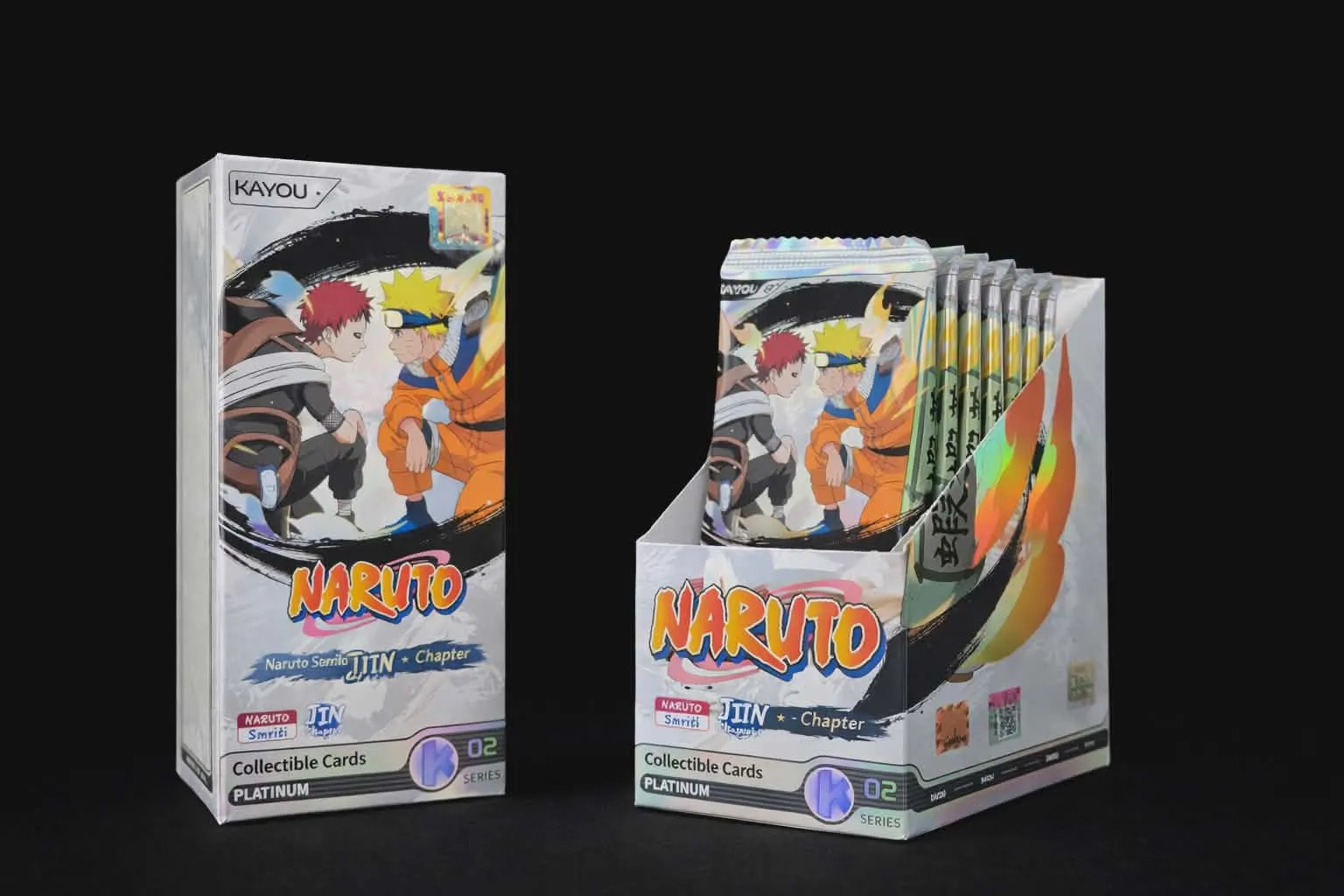
You open a pack, pull something that looks rare, and immediately wonder: what is this actually worth?
It is a reasonable question and a frustrating one, because there is no official KAYOU Naruto price list, no single app that has reliable AU data, and the resale market moves fast enough that whatever you read six months ago may already be out of date.
This guide covers the methodology: how to find what your card is selling for right now, which five factors actually move the needle on value, and where the common research mistakes happen.
Quick Answer: There is no fixed price for KAYOU Naruto collectible cards. Value is determined by checking recent sold listings on eBay AU — not asking prices — and cross-referencing against five variables: rarity tier, condition, serial number / print run, edition (SEA vs NA), and character demand. The rest of this guide walks through each of those in detail.
Why KAYOU Naruto Card Values Vary So Much
KAYOU Naruto cards are collectibles, not a trading card game. There is no competitive play, no ban list, no format rotation forcing certain cards out of use. Value is driven entirely by scarcity and desirability — which means it is more volatile than people expect.
Two cards from the same pack can sit poles apart in value. A common character in near-mint condition might fetch next to nothing. A high-rarity card featuring Naruto or Sasuke in the same box might command serious interest. And two copies of what looks like the same card — same art, same rarity code — can have completely different resale trajectories depending on whether one has a serial number and the other does not.
The other piece: Australia is a relatively small market for KAYOU Naruto. That means thin sell-through on platforms like eBay AU, which can make individual sales look like outliers even when they are not. Understanding the method matters more than memorising any single price.
The Five Factors That Drive a Card's Value
1. Rarity Tier
The rarity tier is the single biggest driver of value and the first thing you should identify. KAYOU Naruto uses a layered rarity system with codes printed directly on cards — from common cards pulled frequently in every pack through to ultra-rare tiers that may appear only a handful of times per box. The higher the rarity tier, the lower the print volume and the higher the ceiling for secondary market interest.
Before you do anything else, look up your card's rarity code and understand where it sits in the hierarchy.
2. Condition
Condition is the lever most new collectors underestimate. KAYOU Naruto cards have surface treatments — foil, texture, special finishes — that show wear visibly. A card pulled and immediately sleeved in perfect condition is worth materially more than a copy handled loose, even if both are technically "from the same pack."
Centering, surface scratches, edge wear, and corner integrity all affect what buyers will pay. Our card condition guide covers how to assess this properly. Do not assume your card is near-mint because you just pulled it; check it under decent light before listing or buying.
3. Serial Number / Print Run
Serialised KAYOU Naruto cards carry a printed number indicating their place within a limited print run — for example, 47/100 means that specific card is the forty-seventh out of one hundred ever printed. The lower the number (and the lower the total run), the higher the potential premium. Number one copies of short-run serialised cards represent the absolute ceiling of collector demand.
If your card has a serial number, it is worth understanding exactly what that means before you price it. The serialised cards guide goes deeper on how these tiers work and what affects their value specifically.
4. Edition: SEA vs NA
The version of the card matters. KAYOU produces SEA (South East Asia) and NA (North America) editions, and while they share art and rarity structures, they are different products with different pack formats, configurations, and distribution footprints. In Australia, the secondary market is dominated by SEA edition cards simply because that is what most collectors have opened.
Before pulling comps, confirm which edition your card is from. An SEA edition card should be compared against other SEA edition sold listings, not NA edition ones — and vice versa. We cover the distinction in detail in the SEA vs NA edition breakdown.
5. Character Demand
Not all characters are equally desirable. Naruto Uzumaki and Sasuke Uchiha consistently generate the strongest collector interest in the secondary market. Kakashi and Itachi tend to hold well. Supporting cast members, particularly minor characters from filler arcs, attract much less demand regardless of rarity tier.
This is qualitative — there is no official ranking — but you will see it clearly when you pull comps. Two cards at the same rarity tier from the same set will often have a meaningful price gap if one features a fan-favourite character and the other does not.
How to Use eBay AU Sold Listings as a Price Checker
eBay AU sold listings are the most reliable free source for KAYOU Naruto card values in the Australian market. Here is how to use them correctly.
Step 1: Search with the right terms. Use the card name, the rarity code, and the edition in your search. Something like "Naruto Uzumaki SSR SEA KAYOU" is more useful than just "KAYOU Naruto card." The rarity code and edition filter your results to cards that are genuinely comparable.
Step 2: Filter to Sold / Completed listings only. This is the critical step most people miss. In the eBay AU search filters, set the listing status to "Sold Items" or "Completed Items." Asking prices are opinion. Sold prices are evidence. A card listed for a high price that has not sold in 90 days tells you almost nothing about what a buyer will actually pay.
Step 3: Match condition to condition. Look at the photos in the sold listings. A near-mint copy and a played copy of the same card will sell for different amounts. If you are pricing a card, find sold comps where the condition is roughly comparable to yours.
Step 4: Ignore no-photo listings. If a sold listing has no clear photos of the actual card, it is not a reliable data point. Buyers who paid high amounts for cards without photos may have been paying on faith; that is not representative.
Step 5: Look at the spread, not a single sale. If you have three or four comparable sold listings, look at the range and where most sales cluster, rather than anchoring on the highest or lowest single result. One outlier sale — high or low — does not set the market.
How PriceCharting Helps (and Where It Falls Short)
PriceCharting is a useful tool for established collectibles markets — Pokemon, Yu-Gi-Oh!, sports cards — and it does have some KAYOU Naruto listings. Worth checking as a cross-reference.
The limitation is catalogue coverage. KAYOU Naruto is a relatively recent entrant in a collector market that PriceCharting was not built for, and the AU-specific data is thin. Prices on PriceCharting skew USD and reflect international market conditions that do not always translate directly to what an Australian buyer will pay in Australian dollars.
Use it as a directional signal, not a definitive source. If PriceCharting shows a card trending up and your eBay AU sold comps agree, that is useful confirmation. If they contradict each other, trust the eBay AU sold data — that is where actual AU transactions are happening.
How Prices Drift Over Time
A card's value at launch is not its value twelve months later. Several forces move KAYOU Naruto card prices over time.
Sealed product availability is the biggest one. When boxes are plentiful and supply is high, card prices are suppressed — collectors can pull their own copies. When a series sells out and supply dries up, singles prices often lift because the only way to get the card is to buy it from someone who already has it.
Character popularity shifts with broader Naruto fandom. Anniversary events, streaming re-releases, content announcements — any of these can spike interest in specific characters and pull up prices on their cards.
Graded population matters for the top tiers. As more collectors submit high-rarity cards for grading, the number of graded copies in the market grows. If population grows faster than demand, graded copy prices can soften.
International supply plays a role too. If a set gets a wider reprint or international release, the additional supply can move prices across all markets including AU.
For a deeper look at how these dynamics play out and what they mean for long-term KAYOU Naruto card value, see our piece on long-term value trajectory.
SEA vs NA Edition: Does It Affect Value in Australia?
Yes, edition affects comparables. In Australia, most cards in circulation come from SEA edition boxes — that is the edition that has been most consistently stocked locally. When you search for comps on eBay AU, the majority of sold listings will be SEA edition cards.
That matters for two reasons. First, the secondary market liquidity is different: there are more SEA sellers and buyers in Australia than NA, which makes SEA sold comps more statistically reliable. Second, some rarity structures and card configurations differ between editions — so a rare card from an SEA box and a rare card from an NA box are not necessarily the same card, even if the art looks identical.
Always confirm the edition before pulling comps or pricing. Check the packaging, check the card back, and match like-for-like in your search. The full differences between editions are covered in the SEA vs NA edition breakdown.
Is It Worth Getting Your Card Graded?
Professional grading — submitting a card to a third-party service that assesses condition and returns it sealed in a protective case with a grade score — can significantly increase the value of top-tier KAYOU Naruto cards. A high-rarity card featuring a popular character, in gem-mint condition, with a grade from a recognised service, is a more liquid and more verifiable asset in the secondary market.
Whether it is worth the cost of grading depends on the card's ungraded value, the grading fee, turnaround time, and the realistic grade outcome given the card's current condition. A card that would grade 8 out of 10 is not worth the same as one that would grade 10, and that gap can exceed the grading cost entirely.
The full decision framework — when grading makes economic sense, which services are relevant for KAYOU Naruto in Australia, and what to realistically expect — is covered in our grading economics guide.
Frequently Asked Questions
How do I find out what my KAYOU Naruto card is worth?
Search eBay AU using the card name, rarity code, and edition, then filter results to Sold or Completed listings only. Sold listings show what buyers have actually paid, which is more reliable than current asking prices. Look at a spread of recent sales rather than anchoring on a single result.
Does a serial number make a KAYOU Naruto card more valuable?
Generally yes. Serialised KAYOU Naruto cards have a printed number indicating how many copies exist, and a limited print run creates genuine scarcity. Lower numbers within the run and shorter total runs tend to command the highest premiums, though character and rarity tier still factor in significantly.
Are SEA edition KAYOU Naruto cards worth more than NA edition cards in Australia?
Not inherently — but they are more liquid in the Australian market because most AU collectors hold SEA edition cards. When searching comps, match edition to edition: pull SEA sold listings if you have an SEA card, and NA sold listings if you have an NA card. The two are not directly comparable.
Does card condition affect resale value for KAYOU Naruto cards?
Yes, substantially. KAYOU Naruto cards use special surface finishes that make wear visible, and buyers on the secondary market are condition-conscious. Near-mint copies consistently sell for more than lightly played copies of the same card, and heavily played copies can be worth significantly less regardless of rarity.
What KAYOU Naruto characters are most valuable on the secondary market?
Naruto Uzumaki and Sasuke Uchiha consistently attract the strongest buyer demand at any rarity tier. Kakashi Hatake and Itachi Uchiha also hold well. This is not static — character demand can shift with broader fandom activity — but these characters have the deepest collector base and the most active secondary market interest.
Can I use PriceCharting to check KAYOU Naruto card prices?
PriceCharting is worth checking as a cross-reference, but its KAYOU Naruto coverage is thin and the data skews USD rather than AUD. For Australian market values, eBay AU sold listings are a more reliable primary source. Use PriceCharting to confirm direction, not to set a price.
The secondary market for KAYOU Naruto collectible cards rewards collectors who know what they are looking at. Understanding rarity tiers, edition differences, and condition — and then backing that understanding with real sold comps — gives you a much clearer picture than any static price list ever could.
If you are chasing the cards most likely to sit at the top of the value hierarchy, the Jin Chapter boxes are where the highest-rarity pulls live. Worth knowing before you decide what to open next.
Keep Exploring
Continue into the most relevant buying pages and cornerstone guides from this topic.
Cornerstone
KAYOU Naruto Cards Australia: The Full Guide
Start here for an end-to-end view of sets, rarities, and the local buying experience.
Read the full guideChase cards
Rarest KAYOU Naruto Cards
The chase cards collectors are hunting and what makes each one valuable.
See the chase listBuying
Best KAYOU Naruto Booster Box to Buy in 2026
The 2026 box rankings: value, chase potential, and the right one for your budget.
See the 2026 picksHonest take
Are KAYOU Naruto Cards Worth It?
An honest collector's read on value, authenticity, and the long-term hold case.
Read the honest takeWritten By
Cottier TCG Editorial Team
Bringing you the latest and most accurate TCG news from across the globe. Based in the Central Coast, NSW Australia.
Collectors Club
Enjoyed this guide? Get the next drop first.
Join the Collector's Club for restock alerts, new collector guides, and early access to KAYOU Naruto boxes before they sell out.
New members get 10% off your first order
Keep Reading
Other stories you might enjoy from our experts.
KAYOU Naruto Earth Scroll Series 2 Booster Box: The Complete Guide
Inside the KAYOU Naruto Earth Scroll Series 2 booster box: 30 packs, 132 card types across 8 rarities, the box-printed odds, and how it compares to Jin Chapter. In stock in Australia.
KAYOU Naruto Card Condition Guide: NM, LP & MP Explained
Near Mint, Lightly Played, Moderately Played — what do the condition grades mean for a KAYOU Naruto card? How to assess raw condition like a collector, plus the KAYOU-specific quirks to watch.
Are KAYOU Naruto Cards a Good Investment?
KAYOU Naruto cards are collectibles, not a trading card game. An honest look at what drives resale value — and what to know before treating them as an investment.