Shop this guide
$144.95 AUD
Pre-order · ships by 19 December 2026
Live price & stock · dispatched from NSW.
Mostly, they are not. That is the part nobody says out loud.
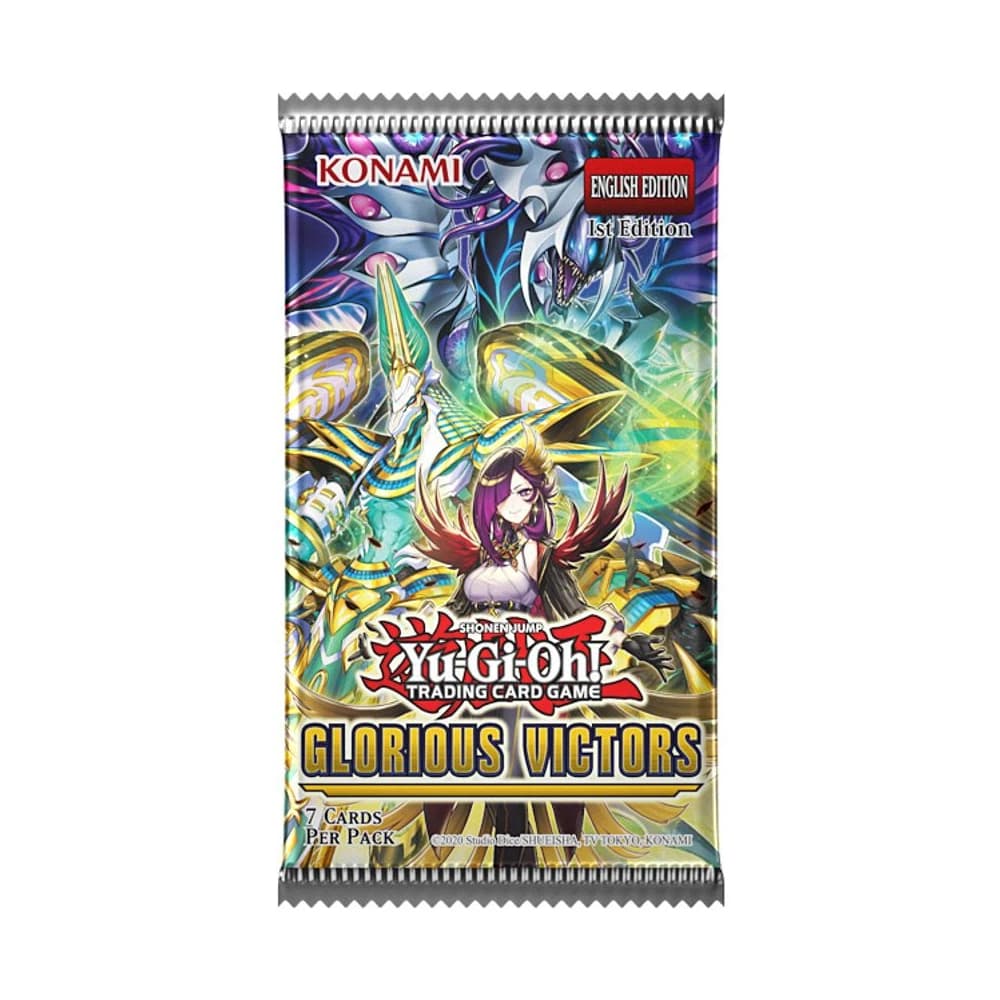
A standard Yu-Gi-Oh! core booster box sells in Australia for around $125. The same box carries a United States recommended price that converts to roughly $150 Australian. On the highest volume product in the range, Australia is cheaper than the American sticker price, not dearer.
Where Australia genuinely does get hit is the special sets. Limited print collector releases can run 50% or more above their converted American price here, and that gap is real, consistent, and worth understanding before you buy.
So the honest answer is not that Australia gets ripped off. It is that Australia pays close to fair on the common product and a real premium on the scarce product. Here is why.
What Australians actually pay, side by side
All Australian prices include GST. American prices do not include sales tax, which is added at the register and varies from nothing to over 10% depending on the state. That matters, because a raw sticker to sticker comparison already flatters the "Australia tax" story before freight is even considered.
| Product type | Typical AU price | US recommended price, converted | Difference |
|---|---|---|---|
| Core booster box, 24 packs | $125.00 | $150.30 | Australia about 17% cheaper |
| Current structure deck | $28.00 | $27.88 | Line ball |
| Special collector set box | $220.00 | $139.46 | Australia substantially dearer |
Snapshot captured 24 August 2026, converted at 1 AUD to 0.7169 USD. Prices move, so treat this as a point in time rather than a standing quote.
The pattern is not random. It tracks print volume almost perfectly.
Why core sets are competitive here
Core booster sets are printed in enormous quantities and distributed globally on a schedule. Australian retail gets a genuine allocation of them, and once several stores hold real stock, they compete on price. That competition is what pulls the shelf price below the American recommended price.
Two Australian distributors move Yu-Gi-Oh! product into local retail, and between them it reaches the big chains and the specialty stores. When supply is healthy, the market behaves like a normal competitive market.
It is also worth knowing that Konami does not run an Australian office for the trading card game. The business is handled out of Konami's European entity, which treats Oceania as part of the same release region as Europe. That has consequences for timing, which we will come to, but it does not make the product structurally more expensive.
Why special sets carry a real premium
Special collector sets are a different animal. They are printed once, in limited quantity, with a high concentration of chase cards. Australia receives a small allocation of an already small print run.
When demand outstrips that allocation, the price moves. That is not really a retailer decision so much as an auction with extra steps. A store that paid more at wholesale to secure stock has to charge more, and a store that missed the allocation entirely has nothing to sell at any price.
That is the honest explanation for the third row in the table above, and it is why we would rather tell you which category a product falls into than pretend the whole catalogue is priced the same way.
The costs that sit underneath an Australian price
Four things sit between a printing press and an Australian shelf.
GST. Ten per cent, included in every price you see here by law. American prices exclude their sales tax, so part of the gap you think you are seeing is a tax display convention rather than a markup.
Freight. Sealed product is heavy and bulky relative to its value. Sending a single booster box from the United States to Australia by post runs roughly $63 to $77 Australian in postage alone, before the box itself. That is why importing one box yourself almost never beats buying locally, even when the American price looks better.
The exchange rate. Stock is bought in foreign currency months before it reaches you. A retailer pricing today is working off the rate that applied when the order was placed, not the rate you can see on your banking app.
Allocation risk. On limited sets, a retailer commits money to stock long before knowing whether it will sell. That risk gets priced in.
Should you just import it yourself?
Usually not, and the maths is not close for a single box.
Goods valued at $1,000 or under have GST charged at checkout by the overseas retailer if that retailer is registered for Australian GST, which they are required to be once their Australian sales pass $75,000 a year. Nothing is collected at the border. Above $1,000, standard import processing applies with duty, GST and a processing charge.
So for one booster box you are not dodging GST. You are adding $63 to $77 of freight and a three to six week wait to save what is often nothing at all. The maths improves if you are ordering several boxes at once and splitting the freight, which is exactly why bulk importers exist and individual buyers rarely bother.
There is a second catch. International shipping of sealed product on the largest American marketplace is opt in per seller, so whether a given seller will even post to Australia is inconsistent.
The timing problem is real, and it is not about money
Here is the genuine Australian disadvantage, and it has nothing to do with price.
Australia does not get its own release date. We ride the European and Oceania release wave. When Konami staggers regions, we wait.
The clearest example: Battles of Legend Monster Mayhem released in the United States and Canada on 13 June 2025. For Europe, Africa, the Middle East and Oceania it landed on 28 August 2025. That is an eleven week gap on the same product, attributed at the time to printing issues.
If you follow American content creators, this is why you spend some months watching people open a set you cannot buy yet. It is a distribution artefact, not a conspiracy, and no Australian retailer can shortcut it.
How to tell whether a price is fair
Four checks, in order.
Work out which category the product is in. Core set or special set. If it is a core set, expect something near or below the converted American price. If it is a limited collector set, expect a premium and decide whether you want it at that number.
Compare the delivered price, not the sticker. A cheaper box with postage on top is not cheaper. Australian free shipping thresholds vary quite a bit between stores, so check where a store's line falls before you judge its price.
Check the recommended retail price. Many Australian stores display it next to their own price. It is a useful anchor for whether a listing sits at, above or below the expected shelf price.
Be suspicious of urgency. Countdown timers, invented "was" prices and permanent sales are the oldest tricks in retail. A price that has simply been the same for months tells you more than a red banner does.
Where we sit
We would rather you checked than took our word for it, so here is the policy rather than a boast.
We do not move a price because a set starts trending. We do not run countdown timers or invented "was" prices. Postage is shown in your cart before you check out, not sprung on you at the payment screen. And we will not tell you we are the cheapest in Australia, because on any given day we might not be, and a claim like that is only true until someone runs a sale.
Our current prices and live availability are on the product pages themselves, including in the panel above, so you are always seeing today's number rather than whatever a blog post said months ago. Compare them against anyone.
CottierTCG is an independent Australian retailer dispatching from Central Coast, NSW. We are not affiliated with Konami.
Frequently Asked Questions
Are Yu-Gi-Oh! cards more expensive in Australia than America?
On core booster boxes, generally no. A standard core box runs about $125 here against a United States recommended price converting to roughly $150. On limited collector sets, yes, often substantially, because Australia receives a small allocation of an already small print run.
Why is there no Konami Australia?
Konami runs the Yu-Gi-Oh! Trading Card Game for this region out of its European entity, which treats Oceania as part of the same release block as Europe. There is no separate Australian arm setting local prices or release dates.
Is it cheaper to import Yu-Gi-Oh! booster boxes from overseas?
Rarely, for a single box. Postage from the United States runs roughly $63 to $77 Australian on its own, which wipes out the difference. It only starts to make sense across several boxes where freight is shared, and even then you wait three to six weeks.
Do I pay GST or customs on imported cards?
For orders of $1,000 or under, GST is charged at checkout by the overseas seller if they are registered for Australian GST, and nothing is collected at the border. Above $1,000, standard import processing applies with duty, GST and a processing charge.
Why does Australia get Yu-Gi-Oh! sets later than America?
Australia is grouped with Europe for releases. When Konami staggers regions, we follow the European schedule. Battles of Legend Monster Mayhem, for example, released in America on 13 June 2025 and in Oceania on 28 August 2025.
What is a fair price for a Yu-Gi-Oh! booster box in Australia?
For a current core set, compare the delivered price including postage rather than the sticker, and check the listing against the recommended retail price the store displays. Core sets should land near or below the converted American price. Limited collector sets will sit above it, and how far above is the judgement call.
Keep Exploring
Continue into the most relevant buying pages and cornerstone guides from this topic.
Line
Yu-Gi-Oh! Legendary Decks
Konami's Legendary Arc-V and Modern Decks 2026 boxsets: factory-sealed English product.
Shop Yu-Gi-Oh!TCG or collectible
Is KAYOU Naruto a TCG?
Why KAYOU Naruto is a collectible card line, not a playable trading card game, and what that means before you buy.
Read the explainerAccessories
Card Sleeves & Toploaders
Protection supplies from Australian stock: they ship in the same parcel as your cards.
Shop accessoriesGuide
How to Store KAYOU Cards
Sleeves, toploaders, and storage habits that keep foil cards mint: applies to every KAYOU line.
Read the storage guideWritten By
Cottier TCG Editorial Team
Bringing you accurate KAYOU collecting news and buying guides for Australian collectors. Based in the Central Coast, NSW Australia.
Collectors Club
Enjoyed this guide? Get the next drop first.
Join the Collector's Club for restock alerts, new collector guides, and early access to KAYOU boxes before they sell out.
New members get 10% off your first order
Keep Reading
Other stories you might enjoy from our experts.
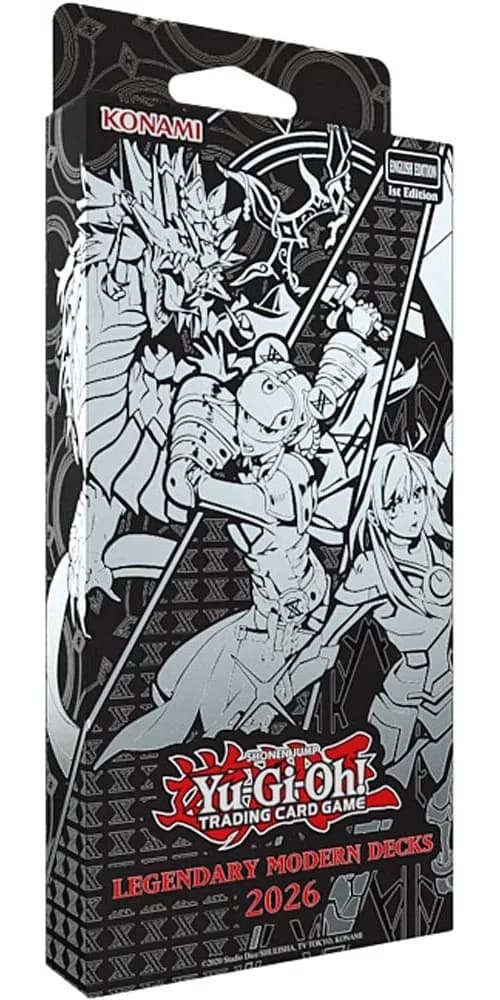
How to Start Yu-Gi-Oh! in Australia: A Beginner's Guide
Yu-Gi-Oh! is the one playable card game in our range. Here is what you actually need to start, why a sealed deck set beats singles for a beginner, and how to find a local game in Australia.
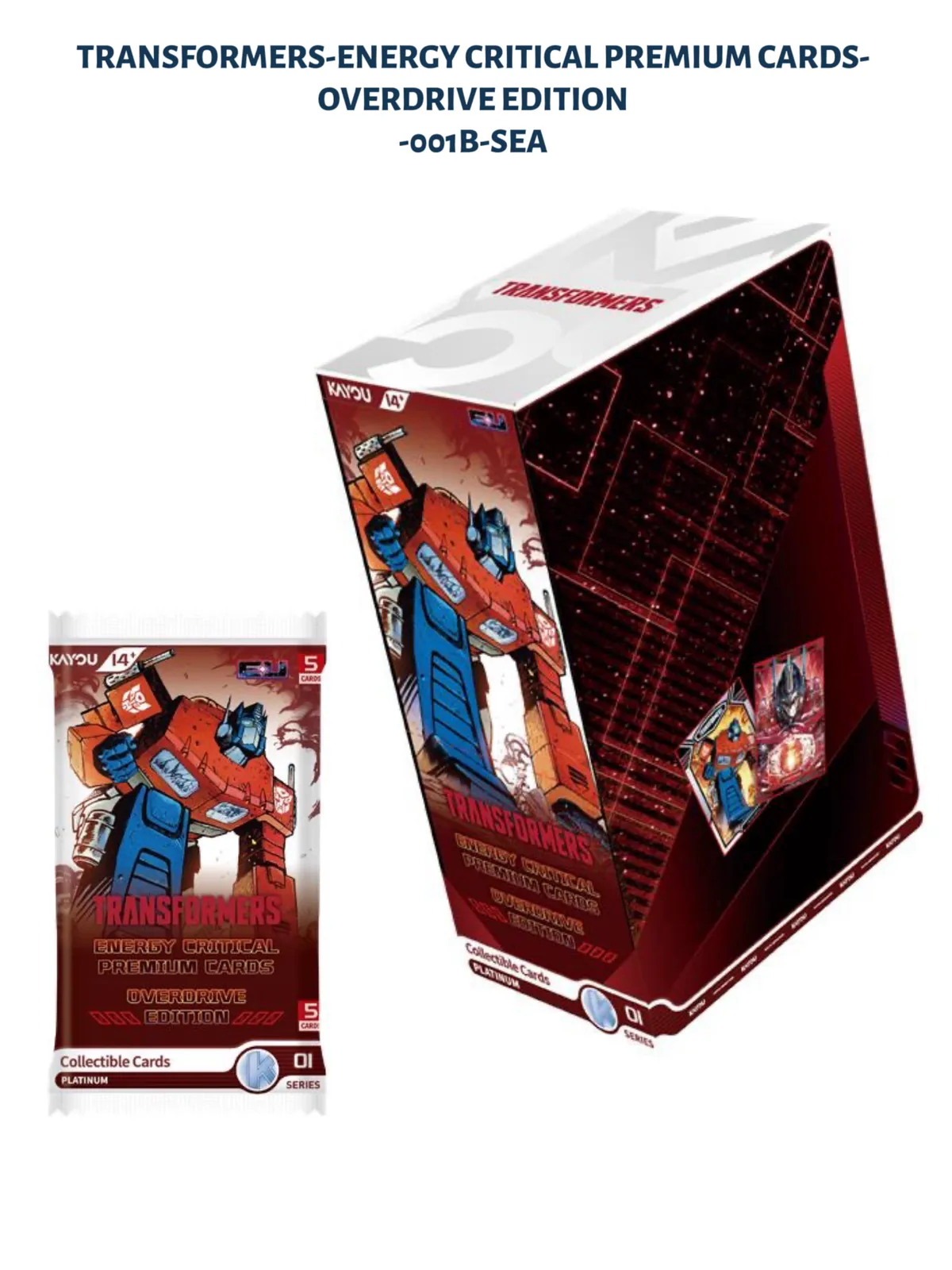
KAYOU Transformers Energy Critical Cards in Australia
KAYOU's first English Transformers set, explained: what's in the ten-pack Energy Critical Overdrive box, the retro G1 comic-style artwork, and why these are collectibles rather than a card game.
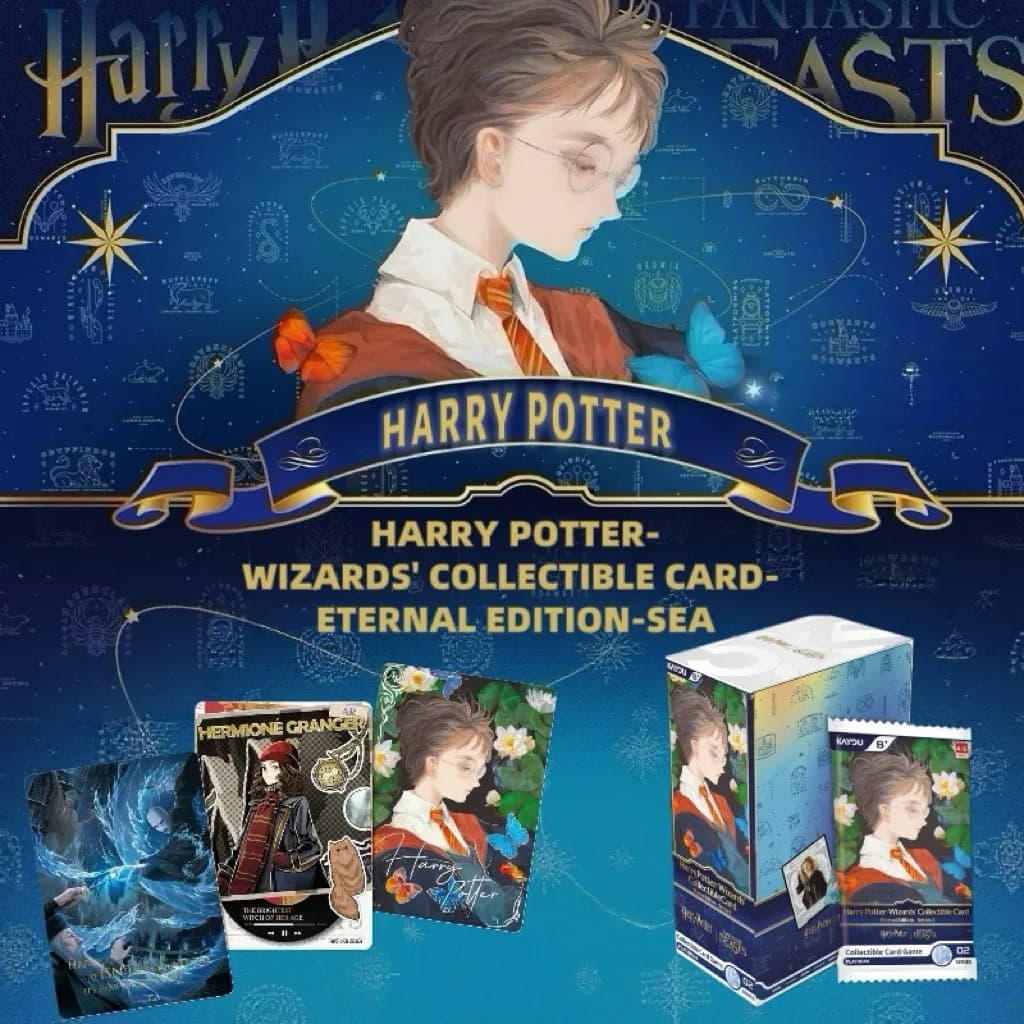
KAYOU Harry Potter Cards in Australia: The Eternal Edition Guide
KAYOU's Harry Potter Wizards' Collectible Cards, Eternal Edition Series 2, in the English SEA print: what's in the sealed 18-pack box, how the 14 rarities fall across each pack, and how to protect the cards before you open.